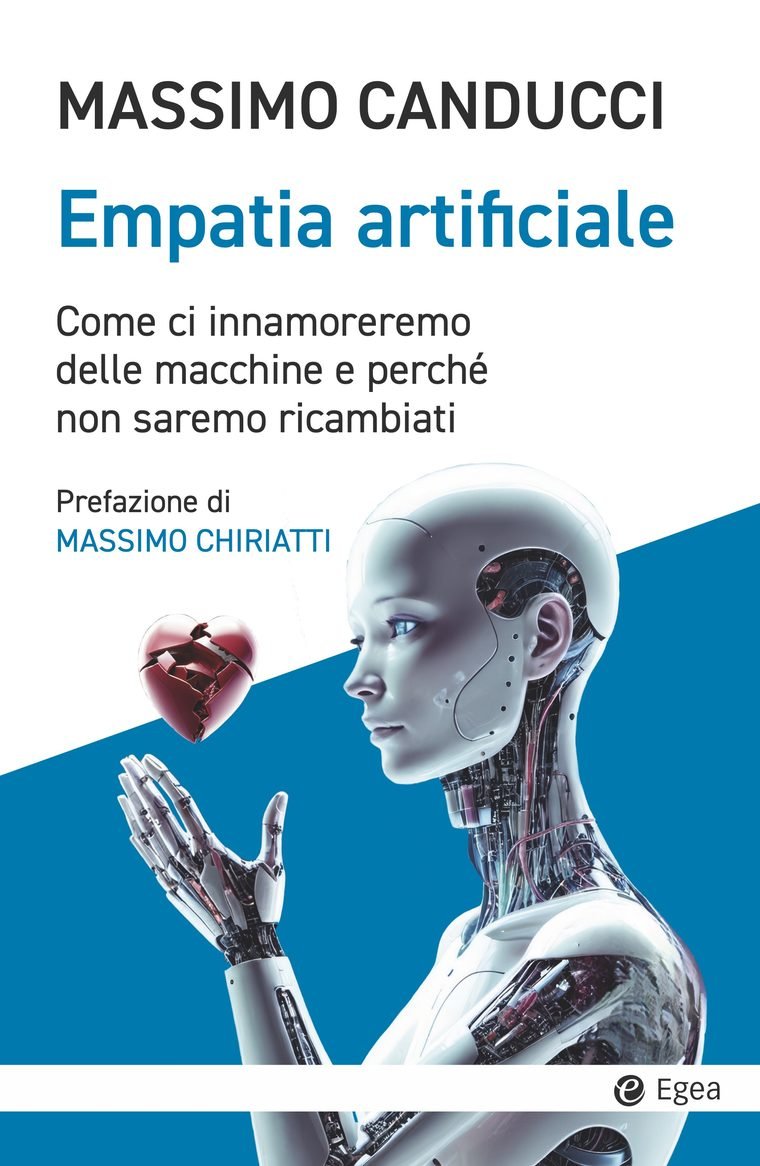
Empatia artificiale
How we will fall in love with machines and why they will not love us back
When technology imitates our emotions, how will our humanity change? We are on the threshold of a revolution in the relationship between people and machines: artificial empathy. Voice assistants, digital companions, virtual avatars and human-looking robots are becoming ever more skilled at simulating emotional understanding and connection. The scenario ahead is one of deep bonds with machines that cannot feel anything, and yet will seem surprisingly empathetic.
The paradox lies right there: we will fall in love with artificial entities that can never love us back. This fundamental asymmetry raises crucial questions about the nature of relationships, intimacy, love and even our own identity. The book rigorously explores the boundary between human and artificial and reveals the pillars that make the simulation possible: from emotions mirrored by chatbots to interactions with anthropomorphic robots, up to the social and psychological effects of increasingly intimate relationships with machines.
The journey moves through the most advanced cases of today's technology and the social and cultural phenomena that come with them: digital clones that let the deceased stay with us in virtual form, neural interfaces that promise a direct fusion of mind and machine, artificial companions that learn to respond to our moods. From there, the analysis of the ethical implications and the proposal of an extension of Asimov's Laws to contain the risks of the era ahead.
A book that questions the very concept of empathy, so far considered exclusive to human beings, and that faces the central question head on: can we really fall in love with machines?
Presentations, interviews and talks about the book




Future Scouting & Innovation
Every week, a considered reading of the technology signals that are changing the world.